





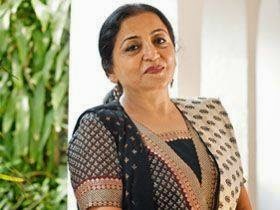
Curriculum Vitae of Madhu Purnima Kishwar
Madhu Kishwar describes herself as a Truth-Winger, a Factarian. This is her own coinage to denote someone who allows verifiable facts to determine opinions and conclusions, rather than preconceived, intellectually crippling & soul-destroying ideologies. Even though, she has discarded Gandhian wisdom in many crucial respects but she lives by the following statement of M.K. Gandhi with firm resolve:
“I have a horror of all isms, especially when they are attached to proper names.”
(M.K. Gandhi, Collected Works, March 123, 1940, Vol. LXXI, p.323_
Job Profile:
- 2021-2023 Senior Fellow, Centre for Contemporary Studies, NMML;
- 2017-2020 Maulana Azad National Fellow, ICSSR;
- 2001-2016 Professor, Centre for the Study of Developing Societies & Director, Indic Studies Project;
- 1998-2000 Reader, Satyawati College, Delhi University;
- 1991-1997 Fellow, Centre for the Study of Developing Societies;
- 1995 Fellow, National Centre for South Asian Studies, Melbourne, Australia;
- 1991 Rama Watamull Distinguished Scholar, Centre for South Asian Studies, University of Hawaii;
- 1989 Fellow, St. Anthony’s College, Oxford University;
- 1973-1990 Lecturer, Satyawati College, Delhi University
Prof Kishwar’s life work represents a rare combination of academic scholarship, research-based social and legal activism, public interest litigation on behalf of vulnerable groups; investigative journalism on issues concerning the most neglected strata of society as well as a valiant defence of Hindu dharma and civilisation from malicious attacks by Break-Up-India Forces.
She considers the following litmus test as important for evaluating the rightness or otherwise of ideas and interventions proposed by self-styled “reformers”– whether or not the measures proposed actually expand the horizons of freedom for the people at large and strengthen family and community bonding. She is extremely suspicious of statist reforms whereby the all powerful sarkar unilaterally imposes reforms through coercive means, such as draconian laws.
Prof Kishwar was also the founder-editor of Manushi – A Journal about Women & Society, which was started in 1978 as well as the founder of Manushi Centre for Civilizational Studies. The print edition of Manushi journal gave way to an online platform www.manushi.in plus a You Tube channel named Manushi-India. In 1993 she also founded Manushi Sangathan—a forum to promote social and political reforms aimed at making governance more accountable and transparent, especially with regard to the rights of vulnerable groups.
As an organization and a journal, Manushi has consistently endeavoured to promote informed activism through research-based writing and critiques on various issues in a manner that integrates women’s rights and concerns in each and every aspect of our national life without tearing asunder the family as an institution and wider community bonds. Prof Kishwar has steadfastly avoided the “ladies compartment” approach to women’s issues.
Her work as an academic includes, but is not confined to:
- Study of Indic Faith Traditions & Civilizational Heritage: As part of her people-centric study of diverse cultures and faith traditions in the Indic universe, Prof Kishwar has written and published a whole body of literature in Manushi and outside that offers fresh insights into our unique cultural and civilizational heritage.
- Laws, Liberty and Livelihoods: This part of Prof Kishwar’s work has been aimed at evolving a pro-poor agenda of economic reforms in India; It involves close investigation of various laws and regulations that trap perfectly legitimate occupations of people working in the unorganized sector of the economy in a web of illegality and ways to craft pro people legislation and state policies for self-employed poor. Her 25 year-long engagement with freeing the livelihoods of street vendors and cycle rickshaw pullers through PILS led to the enactment of new legislation of both these groups, in which she played a lead role.
- Legal Aid and Public Interest Litigation on behalf of vulnerable groups as well as on issues of civilizational importance. The PILs have ranged from land rights of tribal women, defence of Khap Panchayats against malicious attacks on fake charges, challenge to draconian laws, such as the anti-rape law, demanding freedom from the tyrannical license-quota-raid raj imposed on street vendors and rickshaw pullers, and so on.
- Gender Justice Work: Prof Kishwar is widely acknowledged to have pioneered the movement for gender justice through a culturally sensitive approach to strengthening women’s rights within the family as well as in society at large. She considers it important to remain tuned to the context in which women of diverse communities, regions, castes, and class groups are situated. She upholds Gender Justice NOT Gender War. Most importantly, she believes that for the survival of our civilization and dharma, it is vital that the Joint Family should remain its bedrock. That can happen only if it is grounded in fair-play, dmutually beneficial interdependence and justice for all.
Her Gender Justice work has involved in-depth studies & critical evaluation of:
- Various laws enacted in post British India for the ostensible purpose of strengthening women’s rights but have in fact, done the opposite by unleashing forces that tear asunder family as an institution as well as the delicate social fabric which supports it.
- Social reform movements that have put women’s rights centre stage. This includes study of women in Bhakti movements starting 6th to 17th Century, 19th century social reforms movements, women’s participation during Gandhi led freedom movements;
- Political and social movements in post -independence India in which women played an active or leading role.
Both Kishwar’s academic work as well as her life-long work for MANUSHI are aimed at finding effective solutions for the economic, political and social problems confronting us in India today through patient study, non-partisan approach, live interaction with the concerned people and informed activism. Her aversion towards ‘isms’ and ideologies and authoritarian measures for social and economic reforms set her apart from mainstream feminism as well as social justice mongers that draw their main support from Foreign Donor Agencies.
Organizations Founded:
- Founder Editor, Manushi: 1978-till date;
- Founder and Managing Trustee, Manushi Trust (1979 till date);
- Founder President, Manushi Sangathan, Forum for Citizens Rights & Governance Reforms (1993 till date);
- Founder, Manushi Centre for Civilizational Studies, (2019)
Published Books:
- The Girl from Kathua: Sacrificial Victim of Ghazwa e Hind, Garuda Books, March 2023.
- Modi, Muslims and Media: Voices from Narendra Modi’s Gujarat, Manushi Publications, New Delhi, 2014.
- Zealous Reformers, Deadly Laws, Sage Publications, New Delhi, 2008;
- Deepening Democracy: Challenges of Governance and Globalization in India, Oxford University Press, New Delhi, 2004;
- Off the Beaten Track: Rethinking Gender Justice for Indian Women, Oxford University Press, New Delhi, 1999;
- Religion at the Service of Nationalism and other Essays, Oxford University Press, New Delhi, 1998;
- (Ed) The Dilemma and Other Stories by Vijaydan Detha, Manushi Publications, 1997.;
- Manushiya Moatu, (Kannada) A Book of Essays by Madhu Kishwar compiled and translated by L.G. Meera and introduced by D.R. Nagaraj, Akshara Prakashan, Bangalore, 1997;
- Voices from the Save Himalaya Campaign (Hindi), Manushi Prakashan, New Delhi, 1993;
- In Search of Answers: Indian Women’s Voices from Manushi. (Co-edited with Ruth Vanita), Zed Books, London,1984. Second edition, Horizon Books, New Delhi, 1990. Third edition, Manohar, New Delhi, 1996, An abridged version was also published in Japanese by Akashi Shoten, Tokyo, 1990;
- Women Bhakt Poets, Lives and Poetry of Women Mystics in India from 6th to 17th Century (Co-edited with Ruth Vanita), Manushi Publications, New Delhi, 1989;
- Gandhi and Women, Manushi Publications, New Delhi, 1986. (Also published in Telugu).
Forthcoming Books
1. ‘No’ to Copycat Feminism: Women’s Issues from an Indic Perspective,
2. Islamization of India’s Archeological Heritage ( Hindi)
3. Nat Communities of India: Endangered Relics of Indic Culture, Art & Knowledge Traditions, (ICSSR supported research project covering seven states).
4. Nehru’s ill-Informed Codification of Hindu Customary Laws in 1950’s & the Continuing Stalemate Over UCC;
5. Of Khaps & Honour Killings: The Agenda Behind Targeting of Age-Old Traditional Panchayats Based on Fake Charges
6. Challenges in Reforming Anti-Women Provisions in Anti-Women Tribal Personal Laws.
7. Statist Reforms Vs Self Determined Voluntary Reform: Lakshmi Mukti Karyakram of Shetkari Sanghatana.
Chapters in Books:
1. “India’s Anti-Rape Law Reform: The Need for a Surgeon’s Precision” in “Women, War and Violence”, Edited by Mariam M Kurtz and Lester R Kurtz, Praeger Security International, California, USA, 2015
2. “When Daughters are Unwanted: Sex Determination Test in India”, in Women, War and Violence, Edited by Mariam M Kurtz and Lester R Kurtz, Praeger Security International, California, USA, 2015
3. “Manushi Swaccha Narayani: Avatar of a Secular Goddess for Street Vendors” in The Cult of Goddess edited by Arputha Rani Sengupta, published for IGNCA by DK Printworld Pvt Ltd, 2015
4. “Critique of Development Paradigm & Feminism in the Global South” in Companion to Development Studies edited by Vandana Desai for Routledge Publishers, 2014
5. “Women’s Marginal Role in Politics” in section on “Seeking Women’s Rights: Fulfilling Constitutional Guarantees: Reality for Women in Politics”, Volume 2 “Sources of Indian Traditions” Third Edition, edited by Rachel Fell McDermott, Leonard A Gordon, Ainslie T Embree, Frances W Pritchett, and Dennis Dalton, published by Columbia University Press, New York, 2014
6. “Women as Moral Touchstones: Durgas and Mother-Indias in Bollywood Films”, in Gender Politics & Performance in South Asia, edited by Sheema Kermani, Oxford University Press, Karachi, 2012
7. “Reviewing Images of India”, published in Cross Cultural Conversations, edited by Anandita Balslav, Sage Publication, 2011
8. “Beyond the Politics of Zenana Dabba”, in Making News, Breaking News, Her Own Way, a volume of essays by recipients of Chameli Devi Jain award for best woman journalist ofthe year, edited by Latika Padgaonkar & Shubha Singh, Tranquelbar, an imprint of Westland Publishers, New Delhi,2012
9. “Strategies for Combating the Culture of Dowry and Domestic Violence in India”, in “Daughters of Fire”, edited by Vimochana Editorial Collective, Streelekha Publications, 2011
10. “Legal Empowerment and Organization of Vulnerable Groups”, in Human Rights for Development: Ways and Means”, UNDP, 2011
11. “India and Pakistan – 60 Years Later”, published in “The Great Divide: India and Pakistan” India International Centre, 2009.
12. “Urban Informal Sector: The Need for a Bottom-up Agenda of Economic Reforms–Case Studies of Cycle Rickshaws and Street Vendors in Delhi”: in Urban Poverty Report by Ministry of Housing and Urban Poverty Alleviation Government of India, 2009
13. “Gandhi’s Views on Women’s Role in the Struggle for Swaraj”, in National
Movement in India, edited by Shekhar Bandyopadhyay, Oxford University Press, 2009
14. “Continuing Popularity of Sita as a Role Model” in In Search of Sita: Revisiting Mythology”, Edited by Malashri Lal and Namita Gokhle, Penguin Book and Yatra Books, 2009
15. “No’ to Zenana Dabbas: Deghettoizing Women’s Politics and Enhancing Their Representation in Legislatures”, in India’s Political Parties, Readings in Indian Government and Politic” edited by Peter Ronald de Souza.E.Sridharan,Sage Publications, New Delhi 2006
16. “Creative Retailing” in Fast Forward: The Future of India’s Creativit”, in a Report by National Mission for Creative and Cultural Industries, Planning Commission of India, 2006
17. “Gandhi on Women”, in “Debating Gandhi-A READER” edited by A. Raghuramaraju, Oxford University Press, New Delhi 2006.
18. “Beginning with Our Own Lives: A Call for Dowry Boycott”, in Dowry & Inheritance”, edited by Smt Basu, Women Unlimited & Kali for Women, New Delhi 2005.
19. “Dowry and Inheritance Rights”, in “Dowry & Inheritance” edited by Smt. Basu, Women Unlimited & Kali for Women, New Delhi 2005.
20. “Enhancing Women’s Representation in Legislatures: An Alternative to the Government Bill for Women’s Reservation” (with Jayaprakash Narayan, Dhirubhai Sheth & Yogendra Yadav), in “Electoral Reforms in India”, edited by Anjoo Sharan Upadhyaya, Concept Publishing Company, New Delhi 2005.
21. “The Idea of India -Bollywood Style”, in The India Mosaic: Searching for an Identity, edited by Bibek Debroy & D. Shyam Babu, Academic Foundation and Rajiv Gandhi Institute for Contemporary Studies, New Delhi, 2004.
22. “Arthik Azadi Ka Swawal”, in Bharat Ka Bhumandalikaran, (Hindi) edited by Abhay Dube, Vani Prakashan, Delhi, 2003
23. “Shah Bano Ka Mukkadama”, in Secularism Banam Personal Law, (Hindi) edited by, Abhay Dube, Vani Prakashan, Delhi 2003
24. “Yes to Sita, No to Ram: The Continuing Popularity of Sita in India”, in “Questioning Ramayana”, edited by Paula Richman, University of California Press, USA and Oxford University Press, New Delhi, September 2000.
25. “Majoritarianism vs. Minoritarianism” in Minority Identities and the Nation State, edited by D.L. Sheth and Gurpreet Mahajan, Oxford University Press, 1999.
26. “Learning to Take People Seriously” in “Anthropological Journeys”, edited by Meenakshi Thapan , Orient Longman, 1998.
27. “Mothers and Disappearing Daughters: Sex Determination Tests in India”, in, The Politics of Motherhood: Activist Voices from Left to Right, edited by Alexis Jetter, Annelise Orleck and Diana Taylor, University Press of New England, 1997.
28. “Scholar, Fighter, Mother: The Life of Ratnamayi Devi”, in Representation of Gender and Identity Politics in South Asia”, edited by Renuka Sharma, Indian Book Centre, New Delhi, 1995.
29. “Learning to Take People Seriously” in The Changing Face of India, edited by Ved Bhasin and Om Prakash Saraf, Konarak Press, New Delhi, 1994.
30. “A Horror of Isms” in, The Woman’s Question, edited by Marry Evans, Sage Publications, London, 1994.
31. “Prem aur Vivah” in, Stree Ke Liye Jagah, edited by Raj Kishore, Vani Prakashan, 1994.
32. “Sampradayik Hinsa se Sangharsh Kaise Karen” in, Ayodhya aur Usse Aage, edited by Raj Kishore, Vani Prakashan, New Delhi, 1993.
33. “Khuli Duniya, Bandhe Log” in, Vinash Ko Nimantran, edited by Rajkishore, Vani Prakashan, New Delhi, 1993.
34. “Some Aspects of Bondage: The Denial of Fundamental Rights to Women” in, Expanding Government Lawlessness and Organised Struggles, edited by A.R. Desai, Popular Prakashan, 1991.
35. “Scattering the Seeds” in, On Being a Teacher, edited by Amrik Singh, Konarak Publishers, New Delhi, 1990.
36. “Indian Women: A Decade of New Ferment” (with Ruth Vanita), in India Briefings”, edited by Marshal M. Boutton & Philip Oldenburg, West View Press, 1989.
37. “The Daughters of Aryavarta: Women in the Arya Samaj Movement, Punjab” in, Women in Colonial India; Essays on Survival, Work and the State”, edited by J. Krishnamurthy, Oxford University Press, 1989.
38. “The Continuing Deficit of Women in India and the Impact of Amniocentesis” in, Man Made Women, edited by Gena Corea, et al, Indiana University Press, Indianapolis, 1987.
39. “Pro Women or Anti Muslim?” in, The Shahbano Controversy, edited by Asghar Ali Engineer, Orient Longman, 1987.
40. “Women’s Bondage”, in, The Emerging Christian Woman, Church and Society Perspectives”, edited by Stella Faria & Jessie Tellis Nayak, Sat Prakashan Sanchar Kendra, 1984.
41. “Family Life: The Unequal Deal: Women’s Condition and Family Life among Small Peasant and Agricultural Labourers in a Punjab Village”, in “In Search of Answers” with B. Horowitz edited by Madhu Kishwar, Ruth Vanita, Zed Books, London 1984.
42. “Woman Power in Print”, in Opening Eyes and Ears, edited by Kathy Lowe, World Council of Churches, Geneva, 1983.
43. “Aspects of Dowry”, in Third World, Second Sex, edited by Miranda Davies, Zed Books, London 1983.
44. “Drought–God-sent or Man-Made Disaster?” in Third World, Second Sex, edited by Miranda Davies, Zed Books, London, 1983.
45. “Female Infanticide” in, Reclaim the Earth edited by Leonie Coldecott & Stephanie Leland, The Women’s Press, London, 1983.
Papers in Academic Journals:
1. “When Communities Become Nationalities: Politics of Intercommunity Relations in India”: Beyond Borders: The SAARC Journal, 2008
2. “Why Fear People’s Choice?”, Economic and Political Weekly, September 6, 2003
3. “A New Plebiscite Deal for J&K”, Economic and Political Weekly, January 15,
2003
4. “History of Affirmative Action for Women in India”, Paper for Asia Pacific Forum on Women Law and Development, Thailand, 2002
5. “Traditional Female Moral Exemplars in India”, “Education about Asia”, Vol. 6, No. 3, Winter 2001.
6. “Equality of Opportunities vs. Equality of Results: Needed Improvements in the Women’s Reservation Bill”, Economic and Political Weekly, Vol. XXXV. Nov 47, November 18, 2000.
7. “Women and Politics: Beyond Quotas”. Economic and Political Weekly, Vol. 31, No. 43, October 26, 1996.
8. “Breakdown of Conflict Resolution Mechanisms in Contemporary India” in a symposium on the “Limits of Tolerance” in Seminar, 435, November, 1995.
9. “The Primacy of Cultural Issues in Manushi”. Journal of Culture and Policy, Institute for Cultural Policy Studies, Australia, Vol. 6, No. 2, 1994
10. “Codified Hindu Law: Myth and Reality”, Economic and Political Weekly, Vol. XXIX, No. 33, August 13, 1994.
11. “Ways to Combat Communal Violence”, Alternatives, 1991.
12. “Violence on Gurupurab in Jammu”. (With Smitu Kothari), Economic and Political Weekly, April 15, 1989.
13. “Struggle of Indian Women”. Philosophy and Social Action, 14(4), 1988.
14. “Integrity in Women’s Issues”. Seminar, April, 1988.
15. “Nature of Women’s Mobilization in Rural India”, Economic and Political Weekly, (in two parts) December 24 and 31, 1988.
16. “The Burning of Roop Kanwar”. (With Ruth Vanita), Race and Class, July-Sep., 1988.
17. “The Struggle of Indian Women”. Philosophy and Social Action, 14(4), 1988.
18. “Mahilayon Ke bare Gandhiji ke Vichar”. Arthshastri, Oct-Nov., 1988.
19. “Toiling Without Rights: Ho women of Singhbhum”, Economic and Political Weekly, (in three parts) Vol. 22, No.s 3-4-5, January, 1987.
20. “The Daughters of Aryavarta: Women in the Arya Samaj Movement in Punjab”, Indian Economic and Social History Review, February 23, 1986.
21. “Arya Samaj and Women’s Education: Case Study of the Kanya Mahavidyalaya, Jalandhar”. Economic and Political Weekly, 31(17), 1986.
22. Gandhi and Women”. Economic and Political Weekly, Vol. XX, Nos. 40, & 41, 1985. (This has been translated and published in Telugu as a book.) Reprinted in Race and Class, London, summer, 1986
In addition, Prof Kishwar has written over 170 articles for Manushi, nearly 300 articles for various newspapers and magazines—both national and regional. To see the full list of her available articles visit her personal website www.madhukishwar.org
In addition, Prof Kishwar has published:
• Over 170 articles in Manushi Journal;
• About 300 articles in Hindi and English in leading newspapers and magazines of India.
Documentaries & TV programs & You Tube Channel:
The Four Latest Documentaries on the Islamization of Delhi’s Archeological Heritage
Episode 1: महाभारत काल के राजघाट पर गांधी का कबरनुमा स्मृति स्थल!
Episode 2: महाभारत काल का इंद्रप्रस्थ नेहरू-गांधी परिवार की बपौती कैसे बना!
Episode 3: हिंदू नेताओं के थोक में बनाये कबरनुमा स्मृतिस्थल;
Episode 4: आठ सौ वर्ष के इस्लामी आतंक के बाद दिल्ली में बिरला जी द्वारा बनाया पहला हिंदू मंदिर
A Tale of Four Cities: Documentary film on suicides by street vendors in protest against municipal and police harassment (2003)
Manushi Samvad: This program is hosted by Ms Kishwar on Manushi India Youtube channel to discuss issues of national and civilizational importance.
Kisse Kanoon Ke: A series of 13 programme commissioned by Doordarshan reviewing the actual fallout of various laws that have been enacted for the ostensible purpose of protecting or strengthening women’s rights in post-independence India. The legislations covered include the following: Laws to protect women against domestic violence; Anti-rape law; Laws against obscenity and indecent portrayal of women; Equal Remuneration Act; Medical Termination of Pregnancy Act; Reservation for women in panchayats and zilla parishads; Law against bigamy; Law to provide 33 per cent reservation for women in legislatures; Laws to curb Sex Determination Tests; Muslim Women’s Protection Act of 1986; Laws to curb prostitution; Sati Prohibition Act; Inheritance laws for women; Anti-dowry laws.
1. Manas Series: A series of six documentaries for Doordarshan on the following themes:
a. Dahej: Zaroorat ya Majboori (Dowry: Compulsion vs. Need): This deals with social and economic dynamics behind the spread of culture of dowry despite stringent legislation.
b. Auratein: na ghar ki, na ghat ki (The disinheritance of women from parental property):
c. Sharaab: Kaun pilaye, kaun rukaye? (Liquor and State Policy: Why anti- liquor movements inevitably turn anti-state?) This film reviews the economic and political dynamics of anti-liquor movements in four different states: Punjab, Haryana, Maharashtra and Andhra Pradesh.
d. Mera Bharat Pareshan—Socialist era statist controls on agriculture and the consequent rural-urban divide promoted through Nehruvian farm policy
e. Banaye Ajoobe, Kehlayein Picchde: This deals with the impoverishment and marginalization of India’s traditional technologists and artisans, known as Vishwakarma jati.
f. Udaarikaran: Kewal Oopar ka Udaar: License Permit Raj: a view from below). This film explores how the working of the License-Permit-Raid- Raj thwarts the earning ability and efforts of the poor city migrants such as street vendors and cycle rickshaw pullers to move out of the poverty trap.
The above film on street vendors and cycle rickshaw pullers played a vital role in mobilizing opinion for policy and-far reaching law reform for these two sectors.
2. News Watch: Prof Kishwar researched, conceptualized, scripted and anchored a prime-time programme called News Watch on DD Channel 1. This was an investigative weekly programme of media review, providing an informed critique of media reports on important issues covering the content, as well as the presentation of media reports;
3. Baazgasht: A Youth Program for Srinagar Doordarshan (2003).
4. Manushi Geet: a cassette of songs on the need to strengthen women’s rights within the parental family and non-discriminatory upbringing of the girl child. Some of these songs were part of a street play titled Roshni staged by Manushi all over Delhi.
Awards & Recognition:
1. Order of Human Rights: All India Sikh Conference, 1985.
2. Chameli Devi Jain Award, Best Woman Journalist of the Year, Media Foundation, New Delhi, 1986
3. Haldi Ghati Award, Outstanding Journalist of the Year, Rana Mewar Foundation, Udaipur, 1993
4. Prabha Puruskar, for “distinguished service to the cause of women” Keshav Smarak Sansthan, Lucknow, 1997
5. Vidula Samman, instituted by Vikas, An Institution Dedicated to the Cause of Education and Knowledge, Calcutta, 1998
6. Deshasnehi Award, India Development Foundation, Bangalore, 1998
7. Award received from Indians for Collective Action, USA for strengthening the rights of urban self-employed poor, 2009;
8. Narad Jayanti Samman for journalism, 2015.
Organizational Affiliations:
1. Member ILSSC of Indira Gandhi National Centre for the Arts (2017onwards)
2. Member of ICSSR Research Council (2017-2022)
3. Academic Council, Jawahar Lal Nehru University, (2017-2019)
4. Member of the High Court appointed Special Task Force for the reform of cycle rickshaw and NMV policy and drafting new law for them (2010-2012)
5. Member, Academic Council, Central University, Jammu (2012-2015)
6. Task Force, Delhi Government for law reform for NMVs (2010-2012)
7. Member, Expert Committee of Delhi Government for drafting new law for effective implementation of the National Policy for Street Vendors (2011-12)
8. Member, Delhi Government’s committee for the reform of cycle rickshaw policy and amendment in the Cycle Rickshaw Bye-laws of MCD (2008-2010)
9. Board Member, Indian Social Studies Trust, New Delhi. (2004-2015)
10. Life Member, Editor’s Guild of India & Member Executive Committee for 15 years.
11. Advisory Board Member of Janaagraha, Centre for Democracy and Governance, Bangalore (2005-2016)
12. Board of Governors, Indian Council of Cultural Relations (2009-13)
13. Governing Council, Common Cause, New Delhi (2007-2015)
14. Member, Complaints Committee to deal with sexual harassment of women at work place in the Ministry of Culture (2009-12)
15. Governing Board of Delhi International Arts Festival (2010-2013)
16. Secretary, Kashmir Committee, headed by former Law Minister Ram Jethmalani (2012-2016);
17. Member of PM Vajpayee appointed Task Force for drafting National Policy for Street Vendors; (2001-2002)
18. Chairperson, Central Adoption Resource Agency (1999)
19. Member, Board of Trustees, Sambhavna Trust, Bhopal People’s Health and
20. Documentation Clinic (1999-2002)
21. Member, Board of Trustees, Indian Social Studies Trust (1997-2016)
22. Member of Executive Committee, Editor’s Guild of India (1989-2012)
23. Member, Nehru Memorial Museum and Library Society (1989-2003)
24. President, Miranda House Student’s Union (1971);
25. Vice-President, Miranda House Student’s Union, (1970)
26. President, Debating Society, Miranda House (1969);
27. Secretary Debating Society, Miranda House, ( 1968).